The Octopus Site, at La Valette
A small piece of seafront with a long memory. The Half Moon Hotel, the Octopus restaurant, the empty slab, and now — if the conditions hold — the next chapter.
The site at a glance
The site is a corner plot of approximately 696 square metres on the seafront at La Valette, St Peter Port. To the south, two hundred metres along the coast, sit the recently-renovated La Valette Bathing Pools. To the north, the working harbour and Castle Cornet on its tidal island. The site has carried multiple identities in living memory — most recently the much-loved Octopus bar and restaurant, lost to fire — and is now ready for its next chapter.
It is small. It is loved. It is the kind of site that, in the wrong hands, becomes private apartments — and disappears from public life forever. In the right hands, it becomes the second public anchor of the seafront, and earns its way without taking anything from the island.
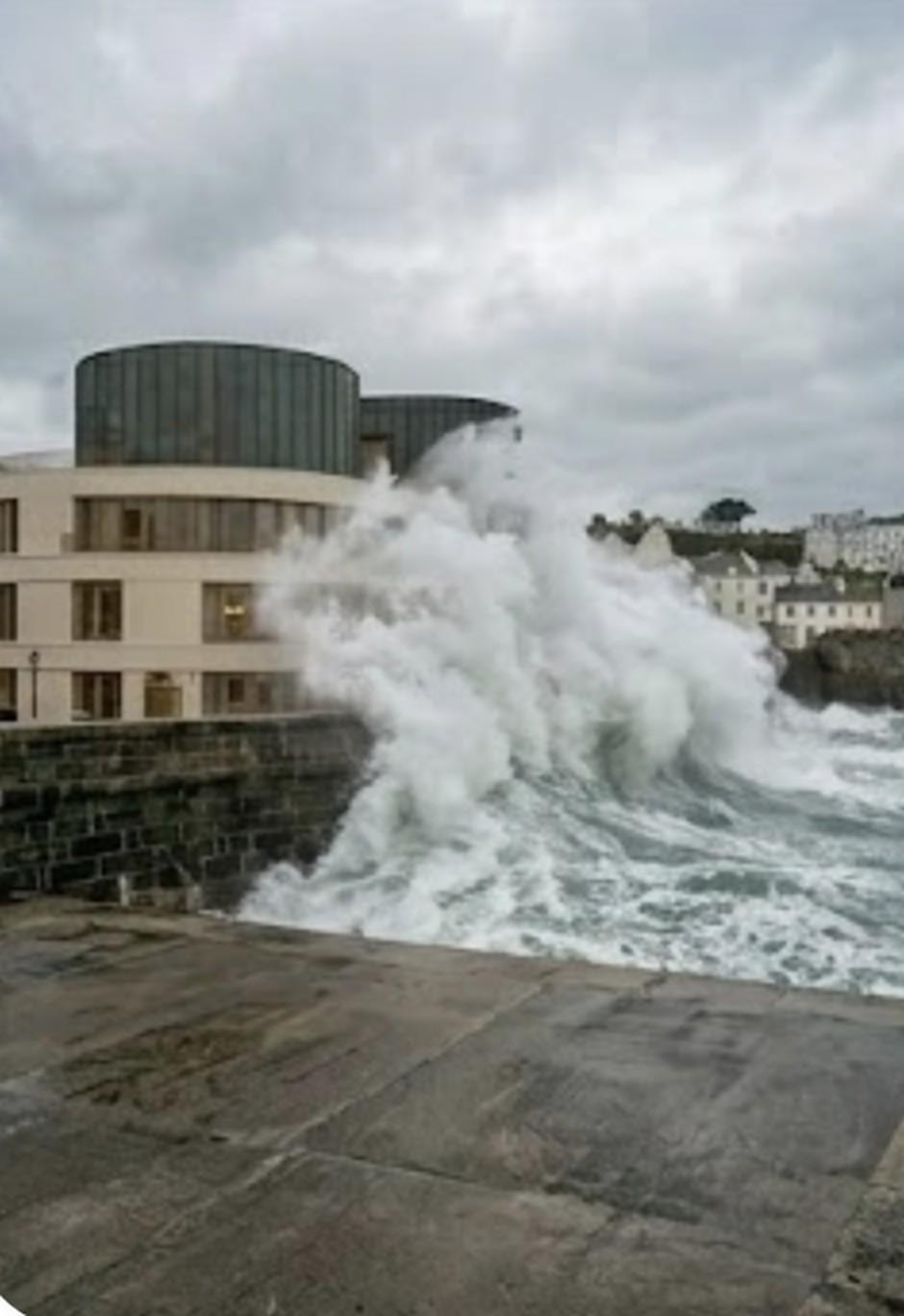
A site with three names
The site has carried three identities in living memory. Each is part of the next chapter.
The Half Moon Hotel
A late-Victorian seafront hotel, named for the curve of the bay it sat above. For decades a fixture of St Peter Port — a place to stay, a place to eat, a place children remembered visiting with grandparents. People do not miss it as a hotel specifically; they miss it as a place on the seafront that worked.
The Octopus
The bar and restaurant that occupied this corner for years — casual, sea-facing, busy. Generations of islanders used it for ordinary milestones: a Sunday lunch, a teenager's first job, a quiet drink with the harbour in front of you. The Octopus was loved. Then a fire took the building. The loss is recent, and felt.
The site between chapters
Since the fire, the seafront has held a quiet space where the Octopus stood. Whatever comes next has to honour what was there — and answer what islanders have said they want from this corner.
The Island Exchange
The next chapter. Not a replica of the Half Moon. Not a recreation of the Octopus. A new civic building that carries both names forward — the Half Moon as the ground-floor café, the Octopus as the rooftop terrace — and uses the architectural envelope to do something neither of its predecessors could: convert visitor value into permanent island benefit.
In memory of the Octopus
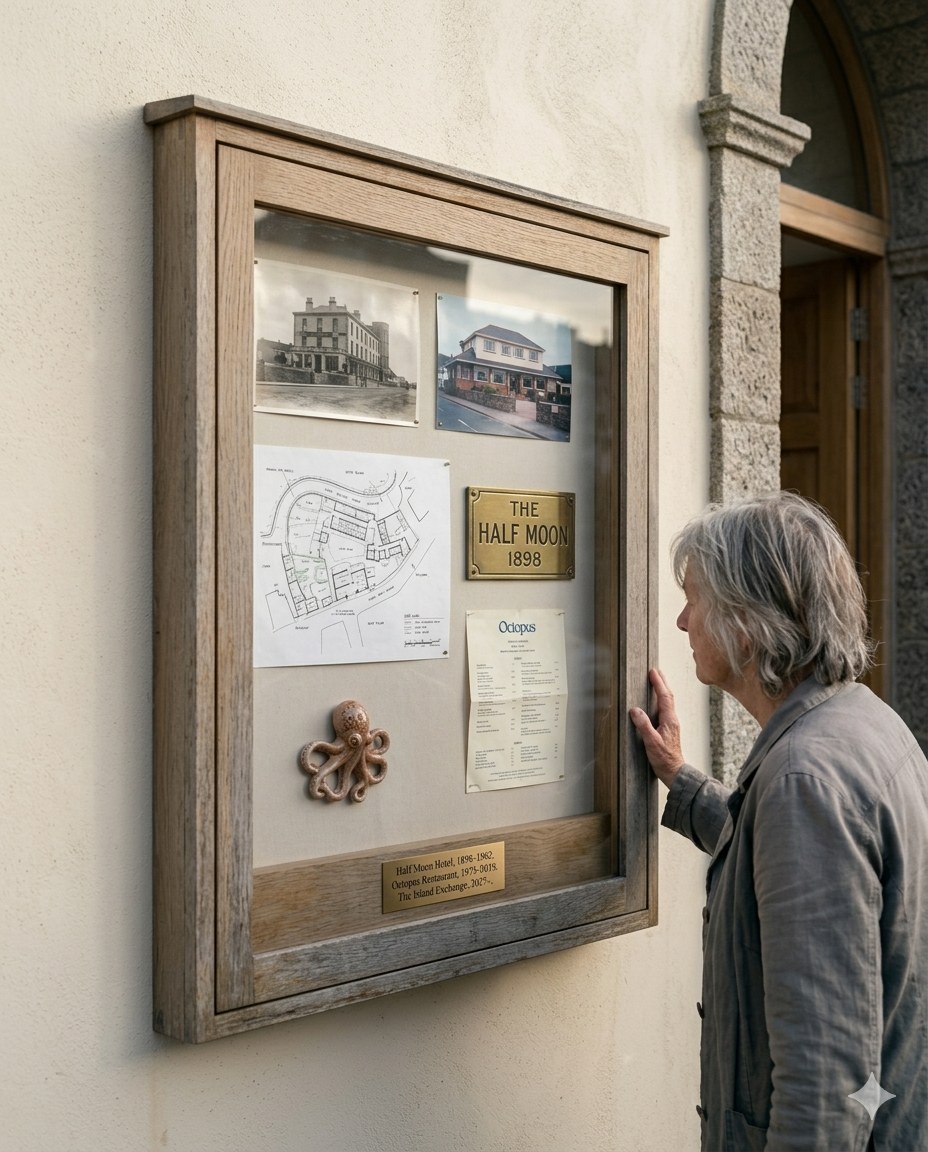
Of the three eras, the Octopus is the one most people on the island carry with them. Two photographs, kept here as a record.
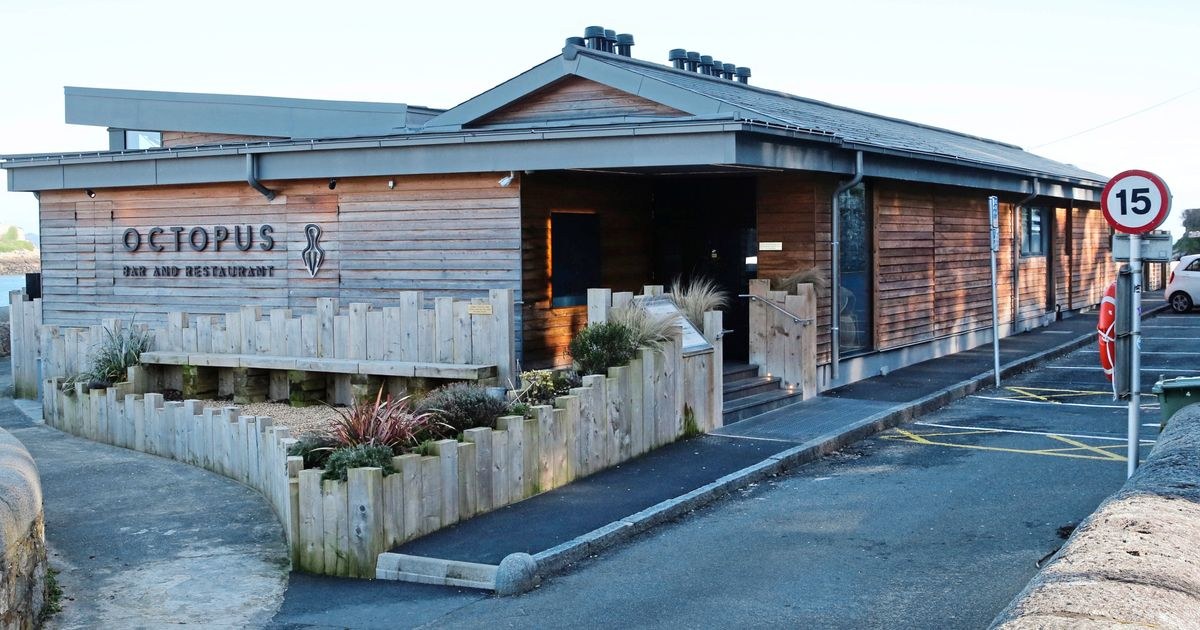
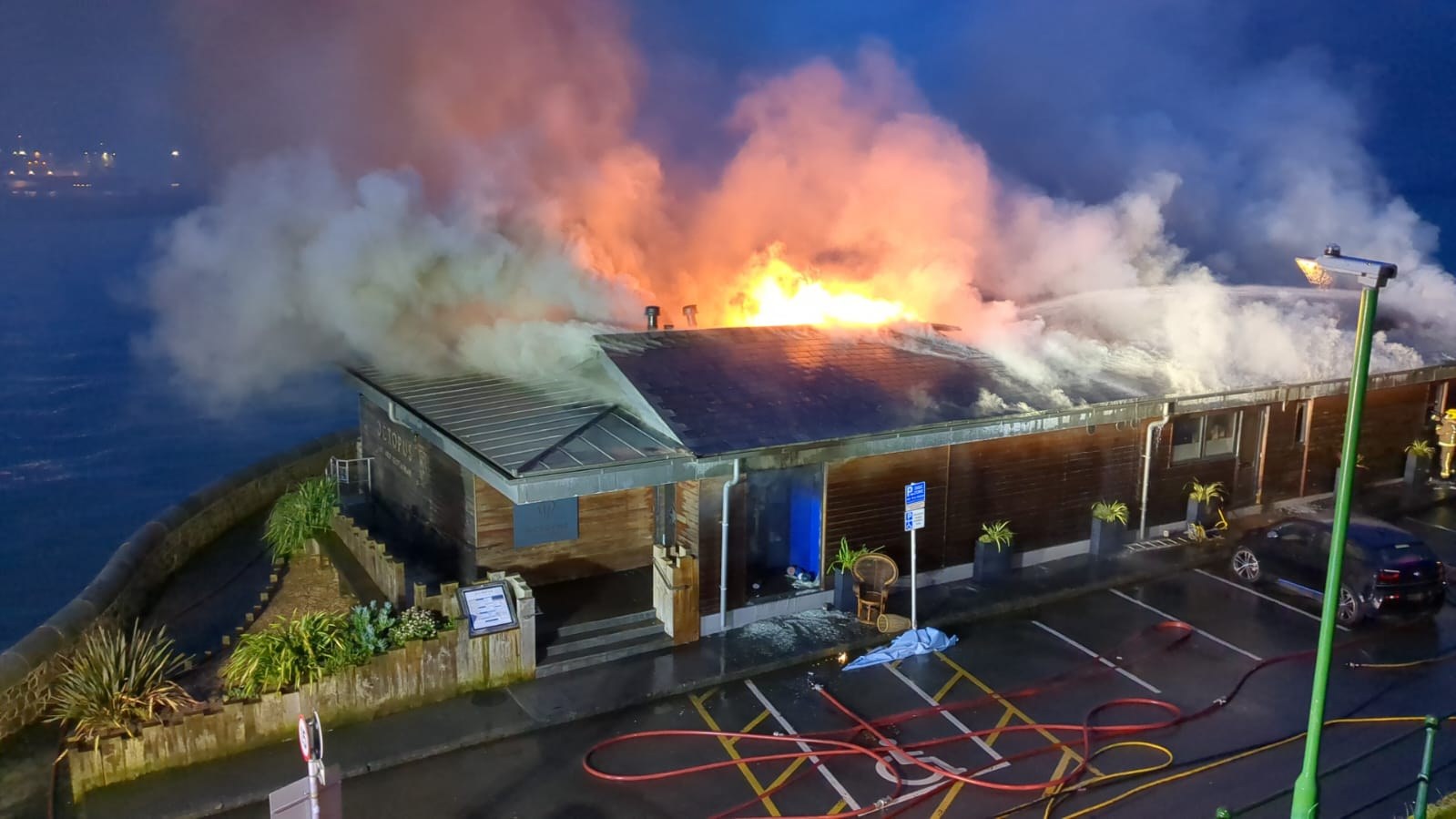
The Island Exchange is not an Octopus reboot. The owners of the Octopus are not part of the project, and what happens to the brand is not ours to decide. What we can do is name the rooftop terrace in the new building The Octopus Terrace, carry the octopus motif gently into the architecture, and keep faith with the kind of place the Octopus was: open, casual, sea-facing, for everyone.
What the island said
When the site came back onto the market, a community feedback report was compiled — distilling the public response into a structured guide for any future purchaser. The Island Exchange brief is built on it.
The report is direct. It says what people want, what they fear, and what would be unforgivable. It does not pretend the tensions between commercial reality and community use can be wished away. It identifies a "sweet spot" — a hybrid model that earns its keep while keeping the view shared and the offer affordable.
The strongest themes were not seven separate ideas but one consistent voice, expressed seven ways:
1. Bring back something like the Half Moon
People do not want a luxury restaurant. They want the easy, daily, sea-facing usefulness the Half Moon had. The affection is for ease, not glamour.
2. Keep the view shared, not captured
The view is the asset. Any new building must make it more available, not less. Premium dining rooms that lock the view away will not be supported.
3. Don't let it go private
The strongest emotional signal in the report. Resistance to private apartments, gated terraces, or anything that reads as exclusive capture of a public-feeling site.
4. Do something for young people
Repeated, frustrated calls for a place teenagers can be. Most "youth provision" fails because adults design it. The report asks for genuine teen space, with budget and trust.
5. Affordability is not optional
Cost-of-living anxiety is real. A coffee, an ice cream, a bowl of soup must be priced at island wages, not visitor budgets.
6. Make it useful all day, all year
Breakfast, after-school, swimmers in the morning, sunset bistro, wet Tuesday in February. The economics work only if the site is alive across the day and the year.
7. Be brave, but not flashy
The public will support boldness if it is beautiful, useful and rooted in Guernsey. They will not support a Mediterranean luxury fantasy or anything that looks like Monaco-on-a-rock.
In the community's own words
These are the recurring registers in the public feedback. Paraphrased and grouped — not direct quotations from named individuals.
"Just bring back the Half Moon — somewhere I can take the kids without booking weeks ahead."
Recurring · families, daily-use"Don't let it become apartments. We've already lost too many seafront spots that way."
Recurring · public-realm anxiety"Where do teenagers actually go? Build something for them, not another wine bar."
Recurring · youth provision"On a wet Tuesday in February, who's it for? That's the test."
The framing question of the report"Who can afford another expensive restaurant? Half the island can't."
Recurring · cost-of-living"The view belongs to everyone. Don't let anyone close it off."
Recurring · view-as-commonsThe community mood board
An early visual study, intended to translate the feedback report's tone into a coherent atmosphere. The palette is deep navy, sea blue, sage green, sand, driftwood, coral. The materials are weathered timber, stone, rope, metal, linen, greenery. The brand vibes — coastal, relaxed, welcoming, authentic, vibrant, sustainable — are deliberately set against the trap of luxury aesthetics.
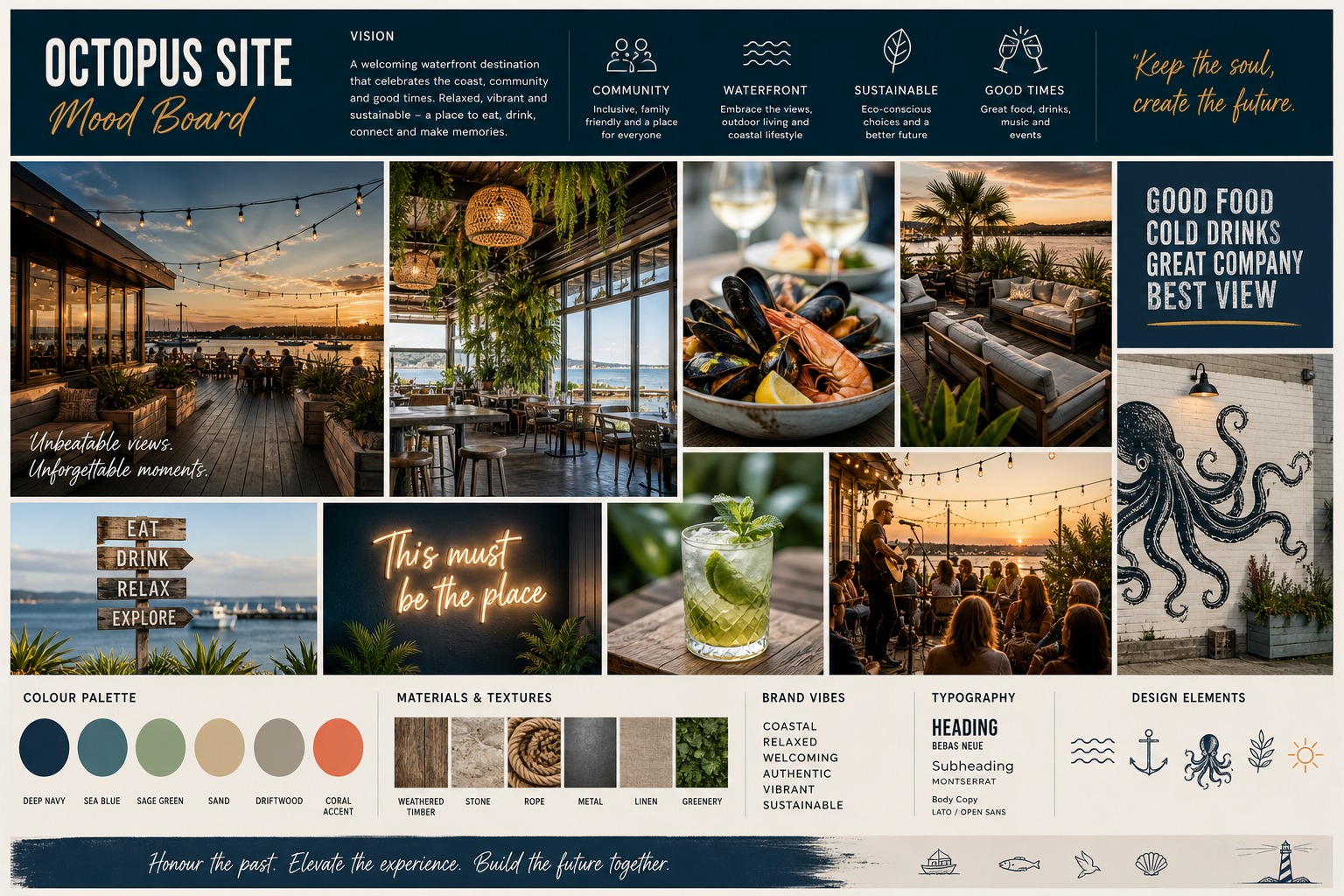
This mood board sits alongside, not in place of, the architectural design discipline. The civic-architectural envelope on The Building page is where the structural and material commitments live. The mood board exists to keep the public-facing programming honest — what the place feels like at 4pm with an ice cream, at 6pm with a cold drink, at 11am with a swimmer's coffee.
How the brief answers what we heard
Each of the seven themes maps to a specific architectural, programming, governance or financial commitment. Not promises — commitments, written into the constitution where possible.
- Bring back something like the Half Moon. The ground-floor café is named The Half Moon. The Tide Table — a 6-metre communal table sized for twelve — is the architectural commitment to multigenerational mixing. The menu is honest food at honest prices.
- Keep the view shared, not captured. The roof terrace — named The Octopus Terrace — is constitutionally locked: minimum 280 hours per four-week period of free public access, events restricted to a published 12 hours per week, quiet hours preserved on the eastern edge at all times. (Building page, diagram 6.)
- Don't let it go private. The asset lock and the six constitutional clauses make the public-benefit obligation enforceable. The building cannot be sold or repurposed into private residential use without breaching the Critical Friends Panel's veto.
- Do something for young people. The youth-keyholder zone has its own access hours and its own £5,000-a-year programming budget, decided by the Youth Council. Hard-coded into the surplus waterfall at minimum £25,000 per annum (Clause 3). Preserved before café upgrades, before suite refurbishment.
- Affordability is not optional. 20% off all paid programming October to March for residents over 65 (Clause 2). Family-rate menu. Pay-it-forward coffee fund. Bursaried teen café roles. Swimmers' coffee at swimmers' prices. The defences against luxury creep are written into the structure, not the brochure.
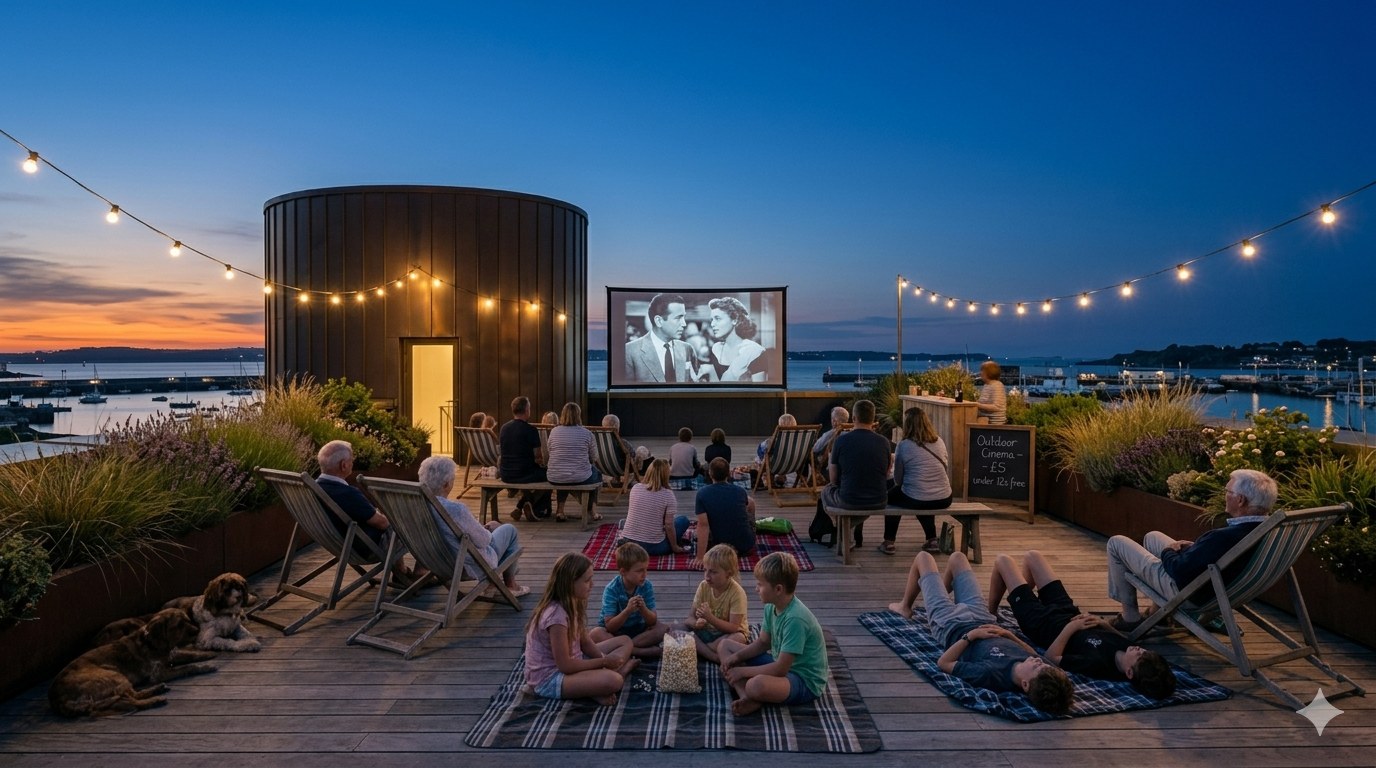
- Make it useful all day, all year. Breakfast at 7am, swimmers' coffee, school-run pickups, after-school youth zone, Friday film club, sunset bistro on the Octopus Terrace, monthly memory café, monthly repair café, outdoor cinema in summer. The "wet Tuesday in February" test is the design brief.
- Be brave, but not flashy. Granite, oak, brass, weathered bronze, lime render, sail canvas. No glass-curtain-wall vocabulary, no chrome, no corporate-international register. The reference is a working harbour building that gets better the longer it is used.
The heritage commitments
The Half Moon and the Octopus are not branding decoration. They are named, located, and architecturally honoured.
- The Half Moon café. The ground-floor café carries the name of the original hotel. The naming is permanent and constitutionally protected — it cannot be re-branded by a future operator without the Critical Friends Panel's approval.
- The Octopus Terrace. The rooftop terrace and sunset bistro carry the Octopus name, with subtle octopus-tentacle motifs carved into the bar front and awning supports. Playful but restrained. Not cartoonish.
- The heritage wall. A small recessed display at the ground-floor entrance carries the site's history — photographs of the Half Moon Hotel and the Octopus, the original site plan, a brass bar plaque, and a small ceramic octopus salvaged from before the fire. A brass plate below names the site's three eras simply.
- Old photographs throughout. Framed black-and-white photographs of the original Half Moon Hotel and the Octopus restaurant hang in the café and the atrium gallery. The past is visible in the present.
- The named spaces. The Half Moon Café (ground floor, with a picture rail above the Tide Table for informal exhibition). The Octopus Terrace (roof). The Long Wall (the atrium gallery, full-height, one local artist at a time). The Lookout Room (private hire and small events). The Tide Room (the working studio — mess-tolerant, residencies in public, school sessions). The Storm Room (the contemplative space). Each name carries its meaning into use.
The seafront cluster
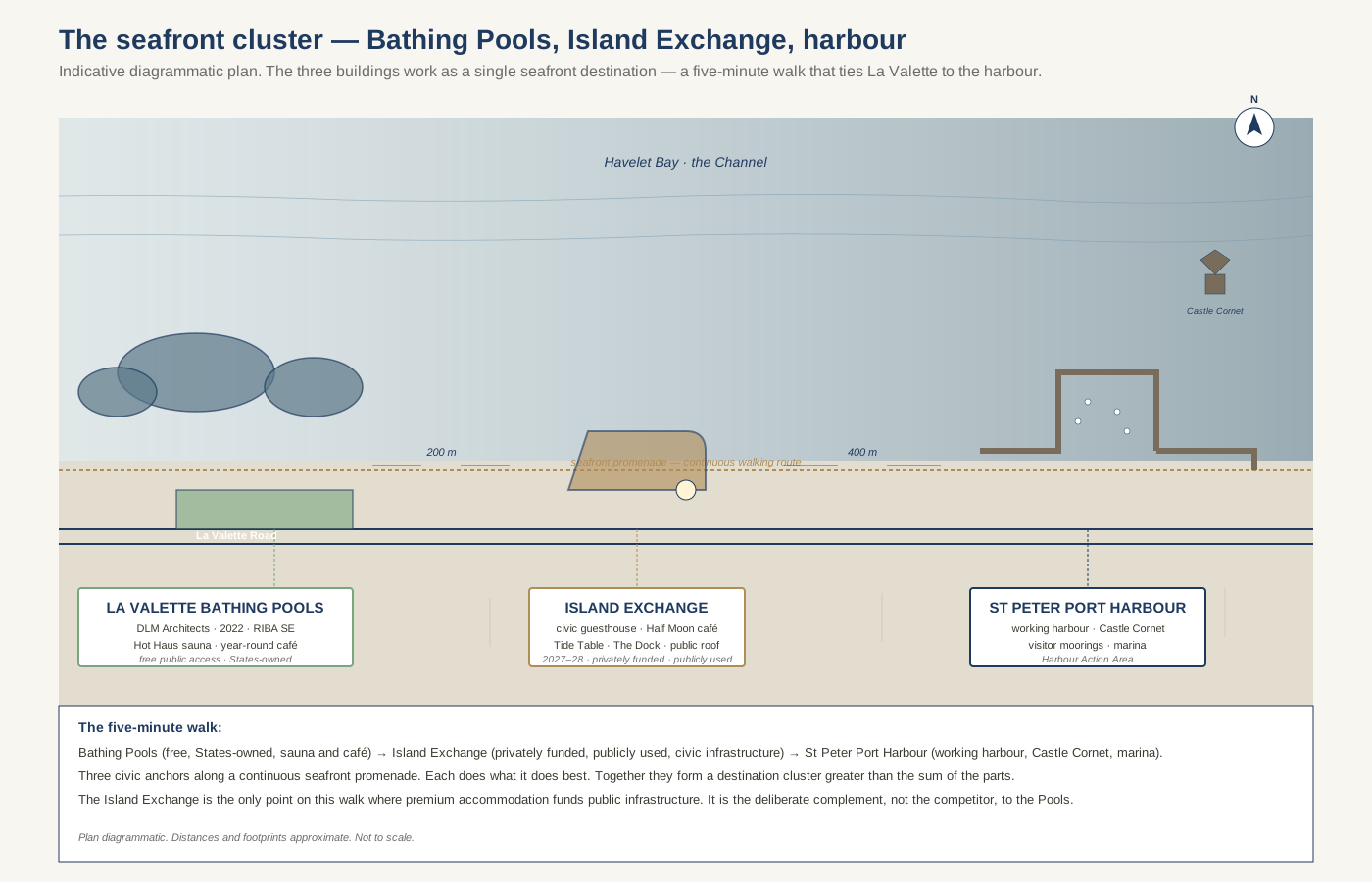
Bathing Pools, Island Exchange, harbour. Three civic anchors along a continuous five-minute promenade walk.
The Bathing Pools (free, States-owned, sauna and café) are the anchor at one end. The harbour and Castle Cornet are the anchor at the other. The Island Exchange is the only point on this walk where premium accommodation funds public infrastructure. It is the deliberate complement, not the competitor, to the Pools.
Sea swimmers come up from the Pools in dryrobes and have a £2 coffee. Walkers from town stop for a soup. Children with sandy buckets get an ice cream. The cluster identity is the project's most natural commercial advantage.
The four tests for this page
If a 7-year-old asks her parent if they can go to The Half Moon on Saturday for storytime, and she gets it, the building has done what it is for.
If a 16-year-old has nowhere else to be on a wet Tuesday in February, and he has the youth zone, the building has done what it is for.
If a 75-year-old who has just lost his wife is shown to the Friday film club by a neighbour, and is welcomed by name on his second visit, the building has done what it is for.
If a 90-year-old with dementia visits with her care home group, hears the song her father used to sing on the upright piano, and her daughter sees her smile for the first time in months, the building has done what it is for.
If all four of those things happen, the rest is detail. If they don't, nothing else matters.